


The Pirate’s Cookbook — Real cooking aboard the Aqua Service.
Some nights, the best meal aboard a working boat isn’t complicated. It’s a big smoked ham, a pot of mashed potatoes, a proper gravy, and vegetables cooked with plenty of butter. Tonight’s dinner brought that home-style comfort straight into the steel-and-stainless galley.

On tonight’s menu
- Reheated hickory-smoked ham
- Mashed potatoes made with plenty of butter and milk
- Ham gravy thickened with cornstarch
- Buttered peas and carrots
- Garlic-butter asparagus finished with lemon
The original photographs follow the real preparation, not a reconstructed studio recipe. Exact quantities, number of crew servings and total timing weren’t recorded, so this is a galley journal and adaptable method rather than a measured, tested recipe.
Step 1: Warm the smoked ham
We opened a Western Family hickory-smoked ham, placed it in a roasting pan, covered it with foil and warmed it in the oven. The label identifies this ham as fully cooked. For your own ham, follow its manufacturer’s storage and reheating instructions and use a food thermometer. The photos do not establish a verified oven setting, heating duration or internal temperature for this meal.


Step 2: Make the mashed potatoes
The potatoes were peeled, cut into large chunks and simmered until tender. After draining, they were mashed; Colin confirmed that he added plenty of butter and milk for a rich, creamy texture. Warm the milk and add it gradually to control the consistency. Mash just until smooth enough for your preference—overworking potatoes can turn them sticky.

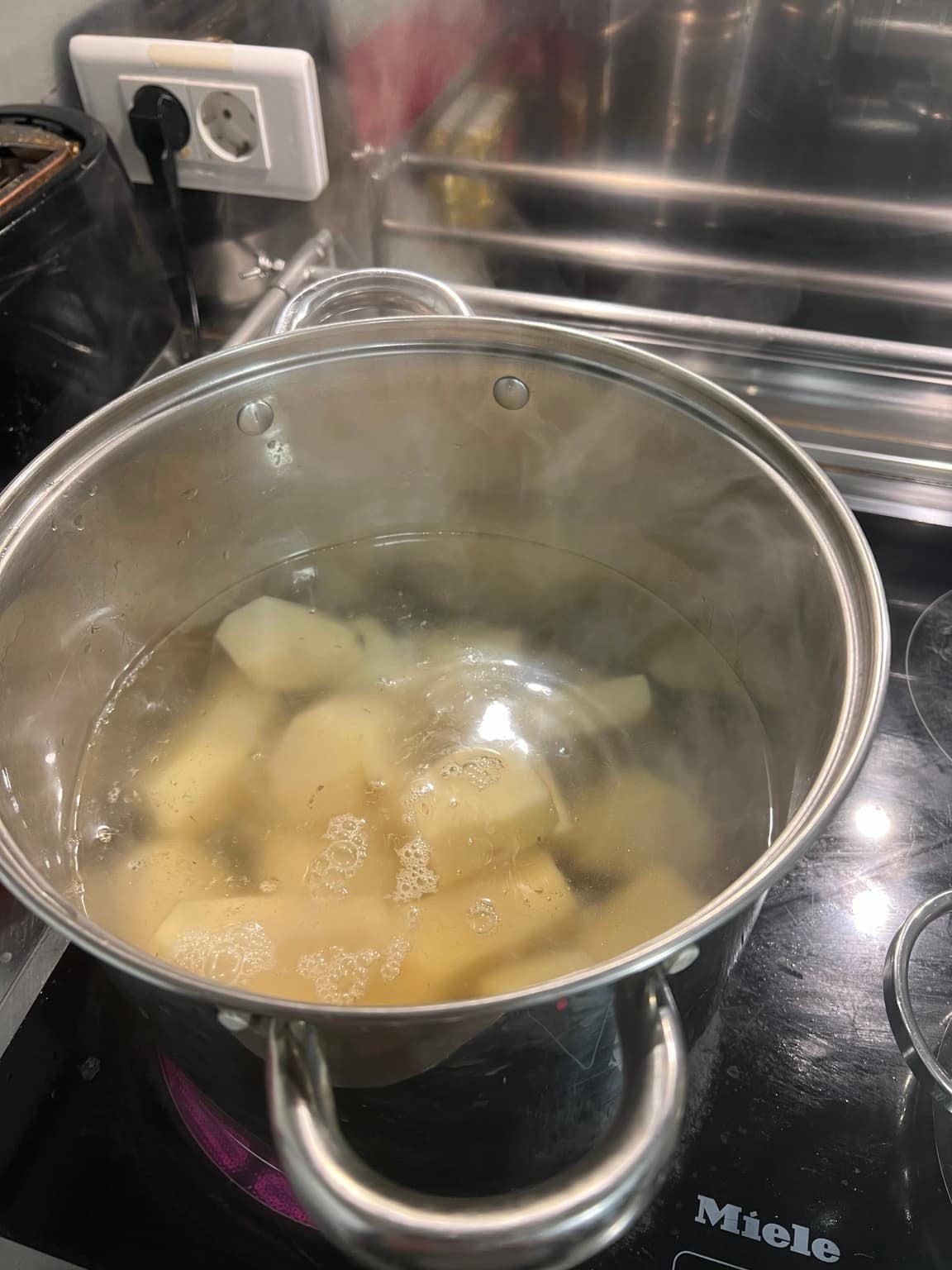
Step 3: Sauté garlic-butter asparagus
We prepared whole asparagus spears and cooked them in a frying pan with generous butter and visible bits of garlic. A squeeze of lemon at serving time added brightness to contrast with the rich ham and gravy.


Step 4: Buttered peas and carrots
Frozen peas and diced carrots went into a small saucepan with butter and were heated until hot and tender. Simple, colorful, and a useful way to round out a crew-sized roast dinner without needing another elaborate dish.

Step 5: Make the gravy with cornstarch
The brown ham gravy was thickened with cornstarch. The trick is to mix cornstarch with a little cold water first, then whisk the slurry gradually into hot, simmering gravy. Keep stirring until the gravy visibly thickens. Taste before salting: smoked ham drippings can already be salty. The photographs show the cornstarch container and the prepared gravy, but not every mixing step or its measured amounts.

How we brought it all together
By the end of prep, the ham was ready to carve, the mashed potatoes were in the pot, and the sides were waiting. The finished dinner plate shows exactly what we served: a generous slice of smoky ham, buttery mashed potatoes with brown gravy, peas and carrots, and two asparagus spears. Nothing staged in a restaurant: this was our real plate from the Aqua Service galley.


Cooking for a crew: what matters
Timing the sides matters as much as the main course. Follow the ham package’s heating instructions while preparing the potatoes; vegetables taste better when cooked near serving time. Keep the service area tidy, handle hot pots safely, and avoid leaving a knife standing upright in the roast. Refrigerate leftovers promptly in shallow containers. Health Canada advises reheating leftovers to 74°C (165°F), checked with a food thermometer; this is general guidance, not a documented reading from our dinner. See Health Canada’s leftover food-safety guidance.
The Pirate’s Cookbook takeaway
You don’t need a restaurant to feed a hungry crew well. Good ingredients, a few pans, a bit of timing, and a whole lot of butter can turn an ordinary work night into something worth remembering.
Real boats. Real meals. More Better Good.
