

Storm Watch
Rain, steel, and long hours off the coast.
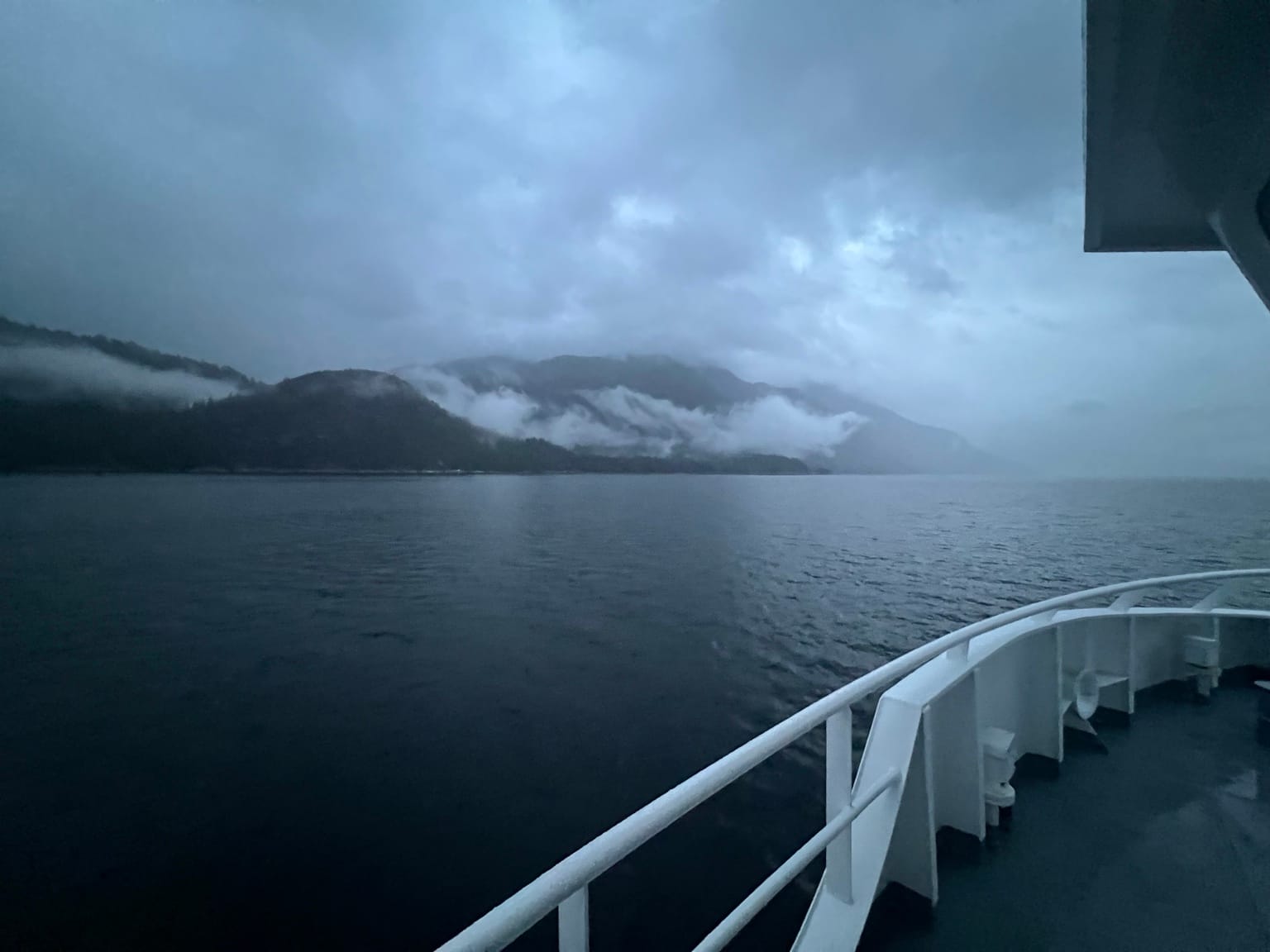
When the Weather Becomes Part of Every Job
Rain gets into the working day in ways a photograph cannot quite show. The deck stays wet. Gear stays wet. Visibility changes, and ordinary jobs demand more attention.
For a deckhand-cook, weather is part of the whole routine: the time outside, the condition of your clothing, the conversation with the crew, and the welcome of something warm from the galley.
Storm Watch is a reflection on that rhythm aboard a working boat off the British Columbia coast. It does not describe a timed storm incident or claim that every job continued through bad weather. The captain and responsible crew decide what can proceed, what must change, and what has to wait.
Rain, Steel, and Changing Plans
Rain: ropes, tools, clothing and exposed surfaces all become part of the wet-weather story.
Wind and movement: the feel of the workplace changes, along with the attention ordinary tasks require.
Visibility: the view that made a beautiful photograph can become a much smaller world.
Cold and fatigue: a long shift is felt in the small things, including the effort of getting comfortable again afterward.
The useful lesson is flexibility. A plan is something the crew keeps reviewing as conditions change.

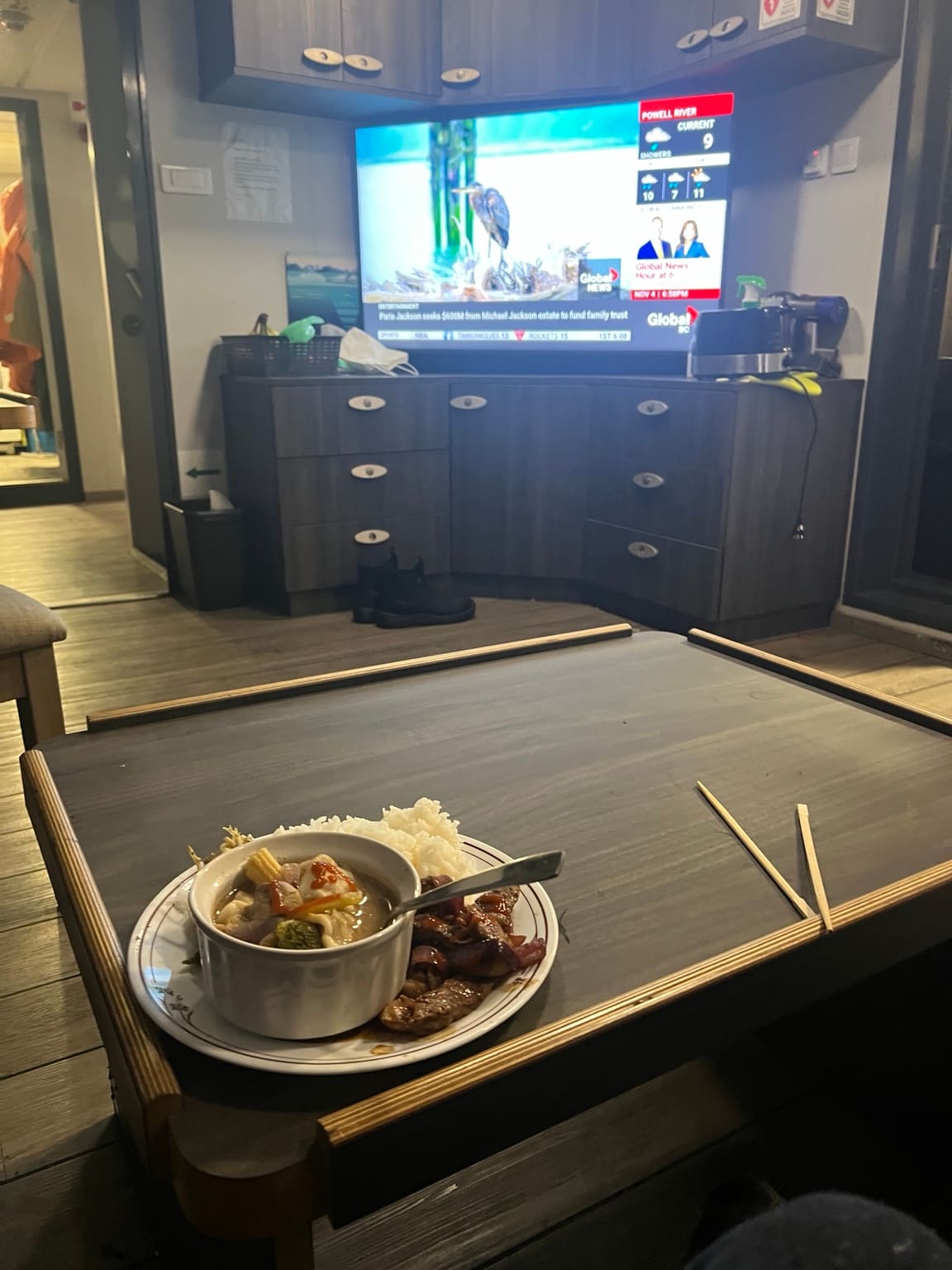
The Crew Rhythm
The working day keeps returning to the same ordinary things: clear communication, an organized work area, attention to the plan, and time to eat and reset when the work allows.
There is no glamorous shortcut in that list. It is the human side of the working day. Warm food does not change the weather, but it can change how the next conversation feels.
That quieter side of boat life continues in The Night Watch. For the scenery between the jobs, read Between the Work and the Water.
Useful English — Weather and Plans
These are language-practice examples, not commands to carry out aboard a vessel.
- “The weather is getting worse.”
- “The visibility is dropping.”
- “Has the plan changed?”
- “Could you repeat that, please?”
- “Who should I check with?”
- “We might have to wait.”
Try it: Say what you notice, then ask one clear question. “The visibility is dropping. Has the plan changed?”
Rough Water, Soft Hands — Asking for Help
Cold hands can make ordinary jobs feel awkward. In this part of the working-boat story, the useful skill is saying clearly when something needs attention. Looking after yourself includes knowing when to speak up.
The crew’s assessment and vessel procedures determine whether work continues, changes or stops.
Problem → Need → Request
English practice, not a recorded crew conversation:
Problem: “My hands are cold.”
Need: “I need a break to warm them.”
Request: “Could someone cover this task?”
Words for the Situation
Gloves: coverings worn on the hands.
Footing: how securely you can stand or move.
Slippery: easy to slip on.
Pause: stop for a time.
Your turn: Name a difficulty, explain what you need, and ask one clear question.
Four Finger Rule — Make It Your Own
WANT TO“I want to understand the plan.”
HAVE TO“I have to listen carefully.”
NEED TO“I need to confirm what you said.”
MIGHT“We might wait for a better weather window.”
Say each sentence aloud. Change one detail to make it your own.
Editorial note: This is documentary storytelling and English practice based on Colin’s working-boat material, not marine-weather, navigation or operational instruction. Photographs show scenes from his collection; they are not a time-stamped record of one storm.
