


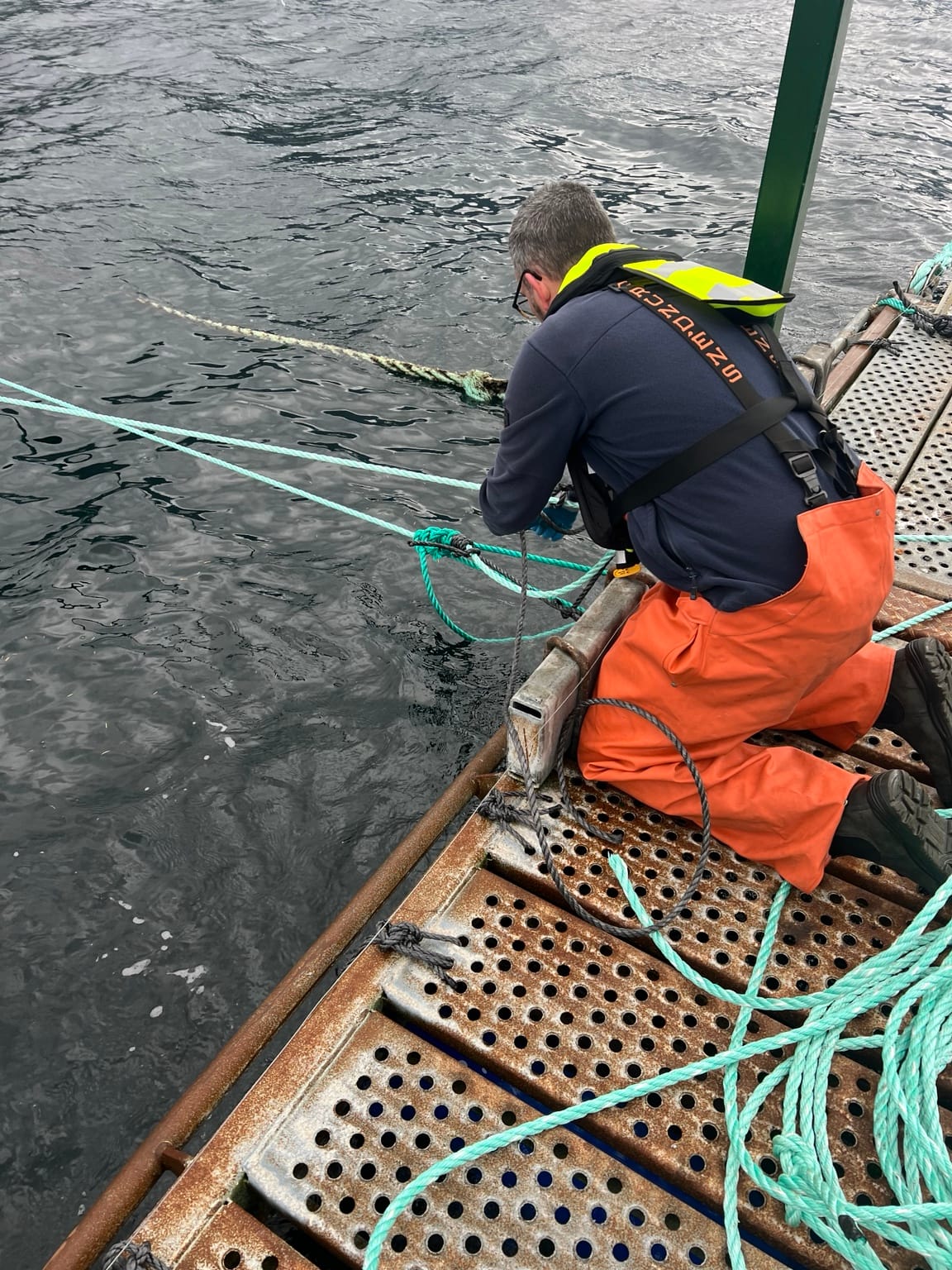
Editorial billboard using a photograph and graphic design. Supporting photographs are scenes from Colin’s working-boat collection, not a step-by-step record of this job.
Crane Work on the Farm
Heavy lifts, hardlines, and working as one crew
The Story
Crane jobs change the mood of the deck. Everyone pays more attention because the gear is heavier, the loads move, and timing matters.
Whether the job is hardlines, farm gear, or helping reposition equipment, the deckhand’s role is usually simple: listen, stay clear, control the lines you are assigned, and do not get creative around a suspended load.
The crane operator, captain, and crew build the job together. Good teamwork looks boring from the outside because everybody already knows where they should be.


Deckhand Lessons
- Plan before the load moves.
- Stay clear of suspended loads and pinch points.
- Use short, clear communication.
- Control only the line or task you are assigned.
Working Vocabulary
- crane — a machine used to lift and move heavy objects
- load — the object or weight being moved
- tag line — a line used to help guide a load
- lift — the act of raising something
- pinch point — a place where moving parts can trap or crush
- secure — to fasten or hold something in place
Four Finger Rule — On the Job
WANT TO — I want to understand my assigned task.
HAVE TO — I have to listen to the crew lead.
NEED TO — I need to confirm what you said.
MIGHT — The plan might change.
Editorial Note
This page is documentary storytelling from Colin’s working experience. It is not formal marine, engineering, safety, fueling, lifting, or watchkeeping instruction.
